Billy wallson
Senior DirectorA honest look at the teamwork, noise, and quiet trust involved in running a team of huskies across snow.
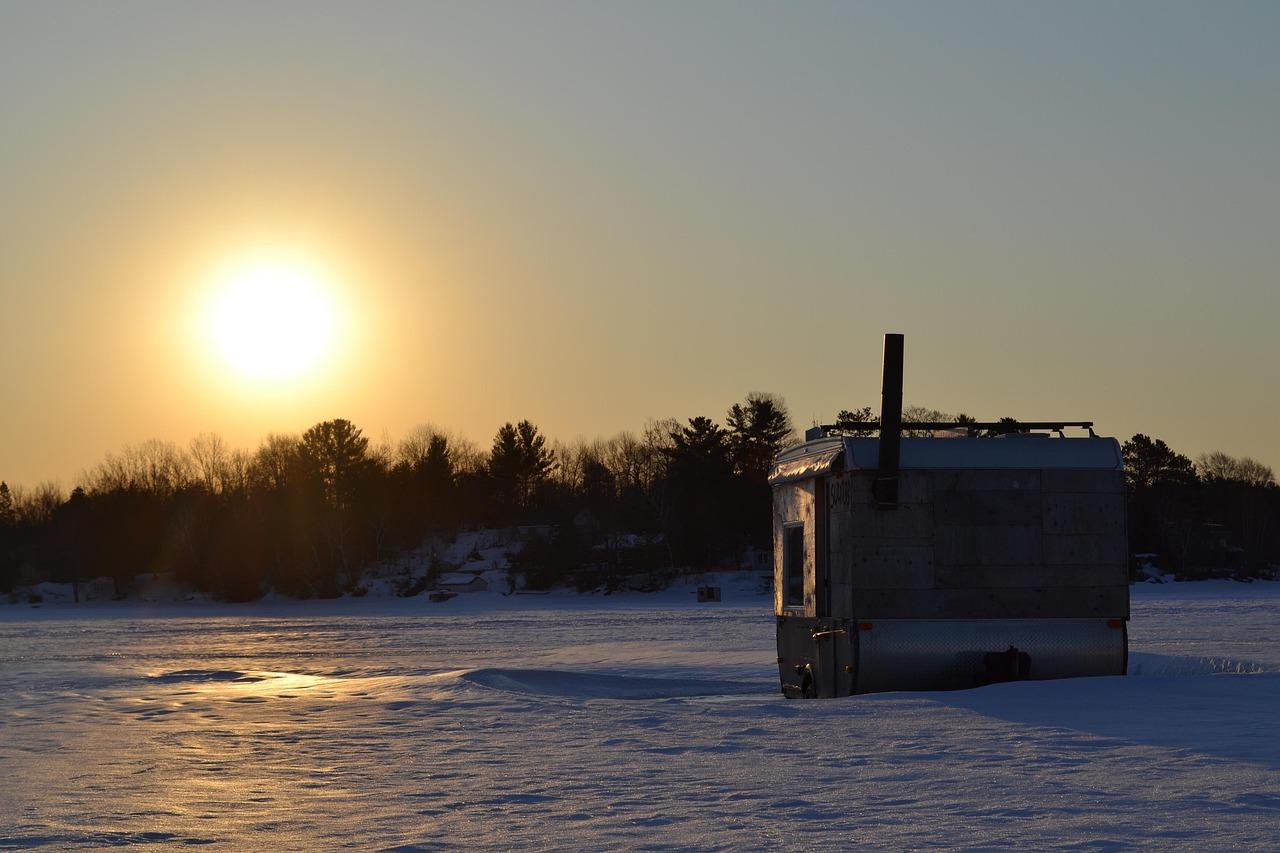
In the sub-Arctic, winter does not shut down the food supply. It changes it. Long before freezers and grocery stores, people relied on frozen lakes for a steady source of fish, and ice fishing remains a practical skill as well as a quiet pleasure. Learning to fish through the ice teaches you to read a frozen landscape, manage cold hands, and wait with purpose. It is also one of the cheapest ways to spend a winter day outdoors, requiring little more than an auger, a line, and a willingness to be patient.
Safety comes first, every time. No fish is worth falling through. Ice strength depends on thickness, but also on the body of water, the current beneath it, and the recent weather. Four inches of clear, solid ice can support a person, but slush layers, springs, and inlets create weak spots that look identical to safe ice from above. Ask locals where people fish, follow established tracks, and carry ice picks around your neck plus a throw rope. Go with a partner, tell someone your plans, and never assume that cold weather means safe ice.
You do not need a shanty or a power auger to start. A hand auger, a simple jigging rod, a few small spoons or jigs, and a bucket to sit on will get you fishing. A sled to haul gear makes life easier, and a thermos of hot tea makes it civilized. For bait, local shops sell maggots, waxworms, or small minnows, but many anglers do fine with artificial lures tipped with a bit of bait. The key is to match what the fish are feeding on in that particular lake.
Finding fish under the ice is the real puzzle. Fish tend to gather near structure: drop-offs, weed beds, rocky points, and inlet mouths where oxygen and food concentrate. If you have a depth map or a fish finder, use it, but you can also drill a line of holes across a promising area and move until you find action. Jigging is an active method. Lift and drop your lure in short, rhythmic motions, pause, and watch for the delicate tap that means a fish has taken it. Set the hook gently. Trout, perch, pike, and whitefish all behave differently, so ask what species are common and adjust your approach.
Staying warm while ice fishing is a skill in itself. You are mostly stationary, so your body generates little heat. Wear boots with thick, removable liners, and bring a spare pair of gloves so you can swap out wet ones. Hand warmers in your pockets help, and a foam pad to stand or sit on keeps the cold from seeping up through your boots. If you feel numbness or a deep chill, stop fishing and warm up. Hypothermia sneaks up on people who ignore the early signs.
Part of the appeal is the meal at the end. A freshly caught fish, cleaned on the ice and cooked over a small stove or back at the cabin, tastes like nothing from a store. It connects you to a long tradition of winter survival in the north, where skill and patience mattered more than equipment. Even if you catch nothing, you will have spent a day reading wind, ice, and water, and that knowledge is its own reward.

When the sun does not rise for weeks, the Arctic reveals a different kind of beauty and a different kind of time.

You do not need a luxury lodge or a pricey tour to see the aurora borealis if you plan around location, timing, and patience.
Recognizing hypothermia early is the single most important skill for anyone traveling in the Arctic.

Everything first-timers need to know about renting, riding, and staying safe on a snowmobile through sub-Arctic terrain.

A honest look at the teamwork, noise, and quiet trust involved in running a team of huskies across snow.

Reindeer and caribou are not photo props, and learning how to watch them without causing harm makes for a better trip.

Copyright © 2026 Tundra Talk. All Rights Reserved.


Roseanne Williams
Sep 10, 2026 ReplyIce fishing teaches patience, ice safety, and self-reliance, and it can put fresh food on the table in the coldest months.